Deliver us, O Truth, O Love, from quiet prayer
from polite and politically correct language,
from appropriate gesture and form
and whatever else we think we must put forth to invoke
or to praise You.

Let us instead pray dangerously –
wantonly, lustily, passionately.
Let us demand with every ounce of our strength,
let us storm the gates of heaven, let us shake up ourselves
and our plaster saints from the sleep of years.

Let us pray dangerously.
Let us throw ourselves from the top of the tower,
let us risk a descent to the darkest region of the abyss,
let us put our head in the lion’s mouth
and direct our feet to the entrance of the dragon’s cave.

Let us pray dangerously.
Let us not hold back a little portion,
dealing out our lives–our precious minutes and our energies–like some efficient accountant.
Let us rather pray dangerously — unsafe, profligate, wasteful!

Let us ask for nothing less than the Infinite to ravage us.
Let us ask for nothing less than annihilation in the
Fires of Love.

Let us not pray in holy half-measures nor walk
the middle path
for too long,
but pray madly, foolishly.
Let us be too ecstatic,
let us be too overwhelmed with sorrow and remorse,
let us be undone, and dismembered…and gladly.

Left to our own devices, ah what structures of deceit
we have created;
what battlements erected, what labyrinths woven,
what traps set for ourselves, and then
fallen into. Enough.

Let us pray dangerously — hot prayer, wet prayer, fierce prayer,
fiery prayer, improper prayer,
exuberant prayer, drunken and completely unrealistic prayer.

Let us say Yes, again and again and again.
and Yes some more.
Let us pray dangerously,

the most dangerous prayer is YES.

– Regina Sara Ryan

My memory is a little messed up. In 2007-early 2008, I had severe back problems and was on pretty heavy pain meds for about 18 months. Within that year, I had three surgical procedures, each one requiring general anesthesia. As I came out of that time period feeling much better and reemerging into the world, I noticed that my memory wasn’t nearly as good. My short term memory requires vigilant note taking and reminders, and there are some gaps in my long-term memory. I recall once listening to a recounting of an historical event and breaking down in tears, because I knew I had once known those facts but could no longer reach them. I didn’t lose everything, but I know that the act of remembering takes a little more work.

But there are some memories I wish I didn’t still have.

I wish I didn’t remember what it was like reading names at displays of the AIDS quilt when I read names at the Transgender Day of Remembrance. While others broke down – a reasonable reaction – I found I could, as I learned in the late 1980s, to read with emotion without getting emotional.

I wish I didn’t remember the moment-by-moment experience of the homeless Desert Storm vet running in front of my car that rainy night in 2006 when last week I sat with the family and friends of a young man who was walking on a street and hit by a drunk driver. I know the general circumstances were different, but it triggered something for me and made the week of pastoral care and memorial preparations all the more resonant.

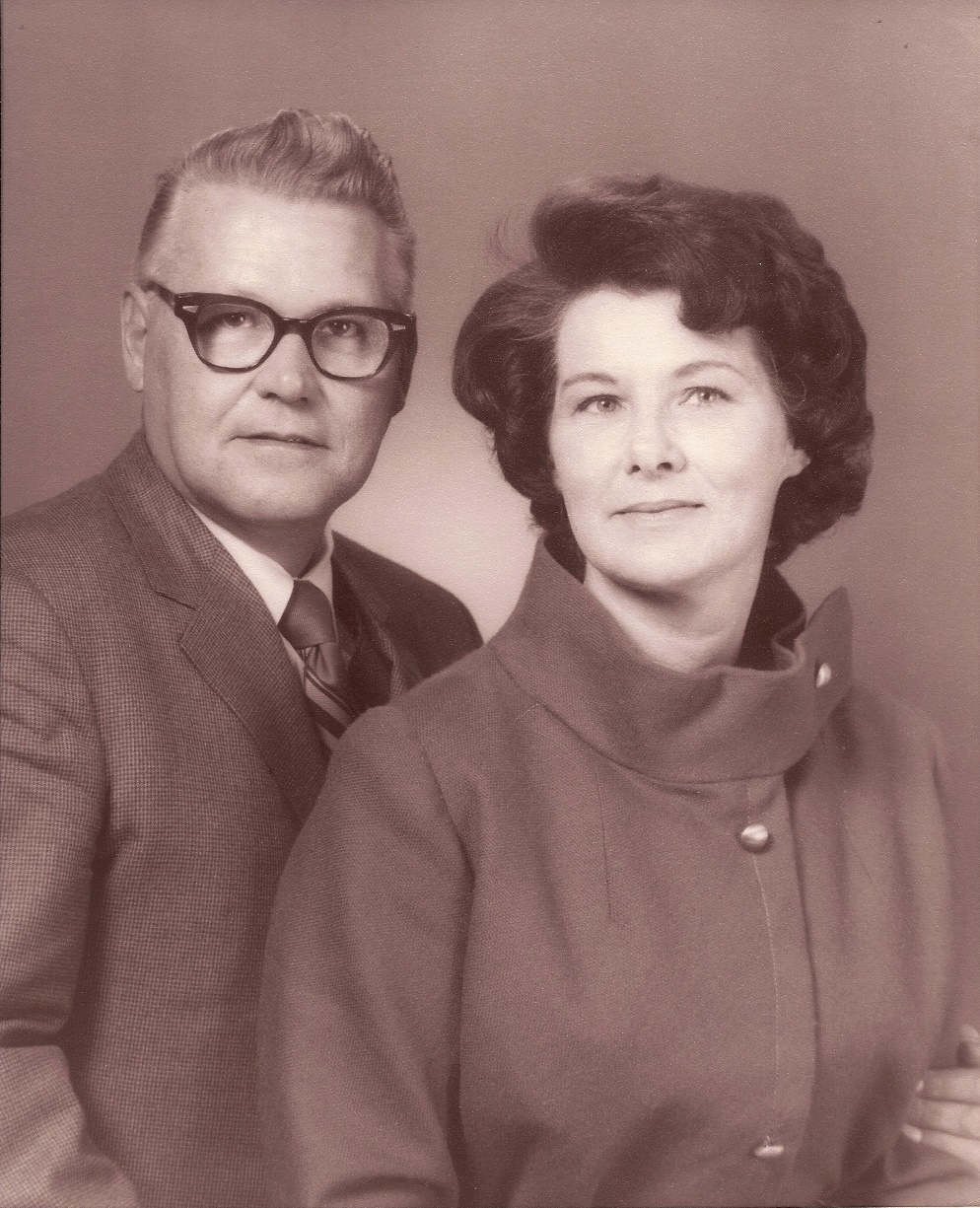
Mom and Dad, 1969
Mom and Dad, 1969

I wish I didn’t remember the horror of finding my beloved partner Tricia almost dead on the sofa when marriage equality is declared legal in yet another state. We were just starting our life together in 1998, and same sex marriage at the time was a pipe dream. I am always so happy when justice reigns and love wins, but I also relive the loss.

I wish I didn’t remember that my mother died on November 21, 2007, when the reminder of my sister’s birthday pops up. While we justified it as fitting, it still is a hard day, and I pray each year that my sister dwells on the joy of her life and the celebration she richly deserves rather than marking it as simply a day of loss.

On the Sunday before Memorial Day in 2013, I was privileged to step into Sam Trumbore’s pulpit at the First Unitarian Universalist Society of Albany. As we led up to a candle lighting ritual, I talked about our need for memorials:

In memorial, the act of remembering is a physical act, that connects us with the past, that connects us with life, that alters time so that past and present can meet, even for a short while. And we find strength in the remembering. Director Anne Bogart says “As a result of a partnership with memory and the consequent journeys through the past, I feel nourished, encouraged, and energized. I feel more profoundly connected to and inspired by those who came before.”

Connected and inspired.

While it would be easier some days to have the pain of some of my memories much more faded than the crisp images that come to mind, when they do come, they connect me to life – my own, those who have died, and those still living. The pain of these memories informs who I am, how I enter the world, and how I interact with others. And yes, the pain of these memories inspires me to keep living, keep loving, keep remembering.

For several years, I have known that my master’s thesis would be a launching pad for my eventual book on theatricality in Unitarian Universalist worship – my general idea is that we can learn something from our performative cousin, theatre, in terms of how we approach everyday worship.

Every time I mention the project to someone, they say “you have to write this book” and I smile at the confirmation. But instead of writing, I think about it, glad I have my thesis to point to as a “good start.” And of course I have a lot of other things going on – my ministerial internship, some work on my next worship-performance piece, and Reading. All. The. MFC. Books.

In October, I attended the Florida UU Ministers retreat, where Mark Morrison-Reed was our inspiring and compelling presenter. I had the opportunity to ride from our meeting place in Mount Dora down to Orlando, where I caught a bus and Mark caught a plane. I told him about my vision of ministry and this book, and he said – like everyone else has – “you have to write this book.”

Now there are a lot of influential people in my life, and I value their input. But when Mark Morrison-Reed said “you have to write this book” – I finally, actually HEARD the call.

But how was I going to write this when I have all these other things happening? That’s when my friend Katy said she was thinking about doing the National Novel Writing Month (NaNoWriMo) – a program for writing about 50,000 words of a novel over the course of the month. Of course, I don’t have a novel in me, but I do have this book. That my advisor, my mentor, my supervisor, my friends, and Mark Morrison-Reed all implore me to write. So I decided to get in on the game, and use the structure of NaNoWriMo to get 50K words of a first draft completed.

It’s been seven days now, and I’ve written about 8,500 words – some of them I like, some of them are utter crap, some of them making me wonder why I think I can put actual English sentences together – but what I am discovering is that I really care about this.

As I start writing various sections about things like setting, story arc, object, or character, I find that I don’t just have things to say, but I care deeply about them. I want our worship to be better – more inspirational, more transformative, more compelling, more meaningful. I want the people conducting and helping in worship to care how it is presented. I want our services to inspire deep thinking and radical compassion. And the more I write, the more I realize how deeply important this aspect of our religious expression is and how much I have to contribute to the conversation.

You could say “of course you care – this is your passion” and you’d be right, of course. I am passionate about the arts as an integral part of how we live our days, express our selves, and connect to the Divine. But it was the depth of my passion that surprised me. It was the tears in my eyes as I wrote about the effects of good transition and the speed of my fingers on the keyboard as I wrote about presence that caught me off guard.

Of course, I did have the ‘why is this, and not some grand justice issue the thing that drives you to write passionate prose of questionable quality” thought – knowing that I am passionate about feminism, LGBTQ issues, and income justice too. But what I know is that if we are only passionate about what happens outside our walls, we will forget that we need the beloved community inside our walls to be fed, inspired, and compelled too. And one way we do it is to create nourishing, inspiring, and compelling worship.

I really care about this. So I’m going to keep writing.

I have never been comfortable with the word “bisexual.” As a young queer woman in Durham, North Carolina, in the 80s and 90s, our community was very clear that we would use the acronym LGBT, but we would struggle with the T (a subject for another day), and we would not believe the B. I grew to understood the B as meaning “not really gay” or “can’t make up their minds” or “horndog.” So in fact, “bisexual” was a wishy-washy term, attractive to couples looking for threesomes, useful as a category to put questioning folks in.

After my partner Tricia died in 1998, I found comfort not from my gay and lesbian friends, but from my straight male friends. They seemed to hear the pain in my heart – especially one friend, Mark. Mark’s comfort was inviting, and my relationship with him did turn romantic for a while. And that was fine. My mistake was telling my lesbian friends, who branded me a traitor to the sisterhood, who called me a “hasbian,” and then proceeded to ostracize me from the community I had loved and served in for years.

Over the next 15 years, I stopped dating women altogether and focused on men. I decided that my “lesbian days were over” but I didn’t quite step into the term “straight” (despite two boyfriends’ attempts). I also didn’t see myself as bisexual, because at that point, I was not sexually attracted to women, and I knew all the problems the B word brought with it.

That was fine for me personally – I didn’t really need labels. However, I knew that many would not understand my personal history, and I worried that they would think my years as an out, proud, activist lesbian were “just a phase” or that I was embarrassed by those relationships and activities – something that couldn’t be further from the truth. But I also carried the old, tired definitions of bisexual with me – and I honestly did not feel attracted to women at that point. How could I be bisexual if I don’t feel attracted to more than one gender? I wasn’t trying to play the field. I knew the truths of my romantic history and sexual orientations. But I couldn’t explain it well. Throughout seminary, I used the word “queer” and said simply “I exist in the queer cloud” as a way to show my general solidarity but not identify as anything I didn’t think I was.

So fast forward to this week.

Bisexual Visibility Week.

I started reading articles, blog posts, and Facebook statuses from and about bisexuals. Someone shared the video of actress Anna Paquin trying to explain to Larry King that her sexual orientation is not defined by the person she is in a relationship with. Someone else talked about the misconceptions about being confused and still sorting their identity out. And then I read this quote from Robin Ochs in an article called Bisexuality 101:

“Bisexuals are people who acknowledge in themselves the potential to be attracted – romantically and/or sexually – to people of more than one sex and/or gender, not necessarily at the same time, not necessarily in the same way, and not necessarily to the same degree.”

Not necessarily at the same time.

Oh.

Oh!

Oh. I AM bisexual… and it is my definitions that are too narrow.

As open and knowledgeable as I am about gender identity and sexual orientation, I was remarkably closed-minded about bisexuality. Mine, particularly. While I was open and affirming about others’ bisexuality, I used the old, outdated, incredibly short-sighted definitions for myself, thus cutting me off from embracing the fullness of who I am.

And I was doing a serious disservice to the people I want to minister to. A recent study shows that bisexual youth face particularly specific challenges. Others may not know what to do or say to be a good bisexual ally, whether they themselves are gay or straight. And others may just need to see the richer, more colorful texture of sexual orientation, even as we speak more fully about the richer, more colorful texture of gender identity. I need to be out, not just as queer, but out as who I am, in order to best serve others.

So…big breath…. here goes:

bisexuality-flag-heartI am bisexual.

I wish to be visible… to my friends, to my congregation, to my community, to my denomination…. and most of all, to my self.

I am bisexual.

I am a sexually healthy, emotionally healthy, spiritually healthy human being that has loved and been attracted to people across the gender spectrum, to different degrees, at different times, in different ways.

I am bisexual.

I am called to ministry, to be everything I am and want to be, including who and how I choose to love.

I am bisexual.


This past Sunday, Unitarian Universalist congregations all over the country celebrated Ingathering/Homecoming. It’s a old tradition from when our elite Boston forebears closed their doors for the summer in favor of cottages on the Cape. But while almost all of our congregations are year round now, we still take the time to welcome everyone back from their summer adventures and officially begin the church year.

watercommunion

The rituals vary (although water is an extremely common element), but there is a sense that on this first Sunday after Labor Day, we start a cycle. It’s akin to the cycle of the school year – whether classes start in August or September, there is something about that cycle – even for adults without school-aged children. And I don’t think it’s just a calendar thing either; I think that when we live our lives according to certain yearly cycles, it affects our thinking, or emotions, and our spiritual practices.

This is on my mind not because I headed to an Ingathering on Sunday, but because I did not. In Key West, many of our congregants are still away: September is generally the slowest month here despite school being in session because many of our congregants are snowbirds or simply have cooler places to go in these dog days of summer. It’s not until later in the fall that things pick up, and it’s not until January that all our snowbirds have arrived.

This is odd for me. Not only am I not starting a school year for the first time in several years, I am not attending any Ingatherings right now. My body says it’s time to start and is looking for a ritual – any ritual. My head is full of songs like Jason Shelton’s “Holy Waters” and Dvořák’s “Going Home” and I can’t help but pause at watery songs as I peruse the hymnals for next week’s singing. My heart is a little sad watching ministerial friends prepare for their Ingatherings and describe the beautiful celebrations they witnessed. And my spirit is feeling out of phase.

Sunday was still a wonderful day at One Island Family – don’t get me wrong. Randy preached a terrific sermon on personal worship and individual altars, and one of our colleagues visiting from the mainland joined us in the pews. I was engaged and enriched.

And when we sang our final hymn, “Blue Boat Home,” all of the things my body, mind, and soul were missing – which I had pushed down in order to be present to our day’s worship – came bubbling to the surface in the form of tears. I had my own private water communion as I felt a deep longing for this deeply-embedded ritual.

I first wrote these ideas down in the form of a Year of Jubilee post on Facebook, but the idea kept haunting me through the afternoon, evening, and into this morning. Why was missing this one yearly ritual so important to me? Why can’t I get it out of my mind?

And then I thought about my mother.

My mother did not want a fuss at her death. She didn’t want a memorial service, a graveside service, nothing. She wanted us to go to dinner and enjoy each other’s company. And she wanted her wedding ring looped into my father’s and buried in the spot waiting for her next to Dad. That was it. And so, when she died in the fall of 2007, that is all the marking we did. Dinner at a nice restaurant a few days after she died, then the general busyness of paperwork, clearing her things, moving on with our lives.

It wasn’t until the next spring, when the ground was soft again, that we went up to the cemetery where Dad is buried, to bury the rings. I don’t know what anyone else was thinking that day; we all trudged up the mountain and up the hill to the spot – my brother and nephew pulled out some tools to dig a hole, which proved difficult, as the soil is very rocky. There was general chatter and conversation. But I was overwhelmed with grief, realizing that Mom’s request had actually robbed us of an important moment in the cycle of life: an organized container for mourning and remembrance, a marker for our grief. I sobbed a bit, and my step-nephew held me. In the silence of my quiet tears I thought a prayer of remembrance, and I think I internally quoted the Christina Rossetti poem. The rest of my family may – or may not – have understood that moment, but it was the moment I needed in the cycle.


We live our lives in cycles – the cycle a lifetime, the cycle of a year. When we don’t mark the moments of our cycles with rituals, celebrations, and memorials, we lose track. We need these markers to help us make sense of our lives.

Now I don’t know if Randy instinctively knew at least one of us would need some connection to Ingathering yesterday, but ending with “Blue Boat Home” helped me, at least for a moment, connect to the cycle of the year that means so much to me. May we always find ways to mark our lives and feel connected to ourselves and each other and we move through our days. 

This is a post I should have written a month ago, when Rev. Jennifer Slade took her life – a beautiful, brilliant, humanity-affirming life. Her death was shocking and jarring. But I didn’t write then, perhaps because while she was a colleague, I didn’t know her personally and didn’t know how to parse it. I didn’t know what to say then.

It’s been a couple of days now since Robin Williams took his own life – also a beautiful, brilliant, humanity-affirming life. And while I didn’t know him personally either, somehow I think we all did on one level – we knew him through his antic comedy and his moving drama. He came into our living rooms and our movie theatres and we knew him. After hearing the news, my cousin wrote, “if he only knew how we felt… really felt.”

And suddenly, I know what to say – to those who loved Jennifer, to those who loved Robin, and to those who love anyone.

It might not have been enough, knowing how people really felt. I know, because I have lived it.

I have lived that moment when, despite having some success and security, I could see no way out.

I have lived that moment when, despite knowing that there were people who would miss me, I thought they would be better off without me.

I have lived that moment when, despite being knowledgeable about mental illness and the tragedies of suicide, it just didn’t matter.

Now obviously, I didn’t commit suicide. Instead, like a robot, I went to work, and thankfully the better angels in my head compelled me to say something to someone. They got me to a doctor, who got me to a psychiatrist, who got me treatment, which helped me get well. I now know better how to manage the sadness, how to reach out, what to look for in my own life so that I won’t go down that road again.

But I have lived that moment, when a decision is made. For me, the delay was largely because I couldn’t come up with a method that I thought would work. But I had made a decision.

There’s a scene in an episode of M*A*S*H, where psychiatrist Sidney Freedman spends some time at the 4077th because he had lost a patient. He explains the moment to Hawkeye:

Actually, the straw that broke my back was a kid who was hearing voices telling him to kill himself. After some time with him, he got very quiet, sometimes that’s a sign they’ve made up their minds. Only somehow, I missed it. And then that night, after we all went to sleep, that sweet, innocent, troubled kid… listened to the voices.

I know that moment of quiet. And I imagine Jennifer and Robin probably seemed calmer to family and friends in those last days than they had leading up to it. It’s impossible to know exactly what was in their mind, but I can imagine, because I’ve lived it.

So what do we do? If I hadn’t said something to a coworker, I might not be here today. The truth is, no one asked me. I put up a front of being very together, very self-assured, very competent and confident. I was (and still am) the person others came to for problems.

What we do is engage.

What we do is talk to people, not about their accomplishments, but about their lives.

What we do is ask “how are you” and stay present as we hear the answer.

What we do is not assume the confident person has a busy schedule and wouldn’t possibly be interested in going to lunch or a movie or helping with a project.

What we do is be present to those who otherwise might be outside our close circle.

What we do is be in covenant.

“Love is the doctrine of this church,” we recite, “to the end that all shall grow into harmony… thus do we covenant with one another.” Not contract, not promise, not lawfully abide. Covenant. Be in right relation. With everyone.

It’s possible that Jennifer had good, strong people in covenant with her and like Sidney Freedman, they still missed the signs. It’s possible Robin was surrounded by people who genuinely loved him, not his celebrity or his genius, and they still missed the signs.

But then I remember the viral stories of the men – one a police officer at the Golden Gate Bridge, one an Irishman who lives near a cliff – who talk to people who look like they’ve made a decision, and encourage them to keep living. They have an unspoken covenant with these people – to know them. To relate to them. To care for them. To listen when no one else will. Sometimes it isn’t the people closest to us that make the difference but simply the people who take seriously the care of being in covenant with one another.

A decade ago, Jeannie Gagne wrote an incredible, haunting piece (available to all of us in Singing the Journey) called “In My Quiet Sorrow,” written to honor those times when we carry “sorrows in our hearts that sometimes go unexpressed—with a prayer for support, love, and guidance. We all have times in our lives that are challenging; sometimes we need to ask for help, but we don’t know quite how or when.” (from the UUA’s song information page) Our covenant to one another is to hold each other and be present for each other in these times:

I am worn,
I am tired,
in my quiet sorrow.
Hopelessness will not let me be.
Help me

I won’t speak
of this ache
inside, light eludes me.
In the silence of my heart,
I’m praying.

I keep on,
day by day,
trusting light will guide me.
Will you be with me through this time,
holding me?

You’re my hope
when I fear
holding on, believing.
Deep inside I pray I’m strong.
Blessed be.

You may not know what to say exactly. But say something. And genuinely listen.

You never know, and you still may miss some of the signs, but you may also make all the difference.
Over at Quest for Meaning, David Breeden made the case for Unitarian Universalism being a Do It Yourself religion. He writes:

We do well to draw a sharp line between the subjectivity of religious experience and the objectivity of a congregational, corporate life together. Where I get my personal religious jolt is up to me—Hinduism, Christianity, Buddhism, paganism, pantheism, atheism, all of the above . . . Up to me. DIY. Where I find my meaning is up to me.

Where I go for my religious, corporate, home is up to us.

For those who will be following Moore’s advice on DIY religion, one of the best homes is a Unitarian Universalist congregation . . . If . . . we can awaken to how big the tent must be.

This is the wisdom of the idea of covenant embedded so deeply in Unitarian tradition. “We need not think alike to live alike,” is the sentiment, even if no one famous ever actually said it.

Breeden makes a good case for widening the tent, recognizing that as the more narrowly-defined mainline churches are declining, we have an opportunity (using his metaphor) to be the craft brewery in a sea of Budweiser. We should be, can be, must be the big tent of belief. Our third and fourth principles (acceptance of one another and encouragement to spiritual growth in our congregations, and a free and responsible search for truth and meaning) demand it. And we have an opportunity as a non-creedal religion to make that tent as large as the world. And he even is clear that we’re not talking about congregational life, but rather individual spiritual growth.

But there is a danger.

As I read his post, Breeden seems to have forgotten the lessons we learned from Tim Taylor.

Tim-Al-home-improvement-tv-show-33059707-392-500The television show Home Improvement featured actor/comedian Tim Allen as the host of a DIY show called “Tool Time” – an expert on DIY, except an incompetent one. The running gag throughout the series was that Tim was constantly at the ER for various accidents, was always messing up a DIY project at his home, and relied heavily on the calmer expertise of his sidekick Norm. Without Norm, all hell would indeed break loose (and often did, to great comic result).

But amid the laughter, we saw Tim waste precious time and resources on ill-advised projects taken up without good support, guidance, or the right tools.

And that is the danger I see in the DIY model of religion. I should know. I was a DIYer for a long time.

Throughout my 20s and most of my 30s, I did it myself. I read books, I tried my hand at spiritual practices, I attempted to find communities of likeminded people to conduct rituals with, but my actual religious life was a mess. Even in those early years of attending a UU congregation, I was there mostly for the LGBTQ activism and the music. I was a DIYer, and I knew my path.

Except I didn’t. Contradictions abounded in my beliefs, in my practices. I felt constantly adrift, always looking for the next cool thing to feed my spirituality.

And then I began attending a UU congregation whose minister actually cared about our spiritual growth as well as our personal growth. Her gentle and calm expertise helped me, and others in our congregation, find and explore our spiritual paths responsibly and with great care. As a result, I stopped drifting and seeking aimlessly, and I began to not only understand my beliefs (which, as it turns out, is Universalism on a bed of Process Theology, seasoned with Paganism and a bit of Christianity on the side), but finally stop long enough to hear the call to ministry.

Breeden is right in that we have – or at least should have – a tent big enough for the wideness of spiritual understanding. But we should not be a place where folks wander aimlessly through the aisles hoping the right screw or angle brace jumps out at us. We should not be a place where a towering wall of microbrews beg for our attention with catchy names and striking labels. Let us instead be a place where each person is calmly and gently welcomed and guided by those who have been on the path before us and know the way. Just as home improvement stores hold classes and have experts on hand, so should we – courses like  Building Your Own Theology and Wellspring Spiritual Deepening, along with good spiritual direction, make all the difference.

That is why we are a religion and not a collection of people who like some of the same things. Not because we believe the same things, but because we travel together with knowledge and the same kind of seeking hearts. Our tent is big, but our tent should contain experts and signs and guides and companions so that we don’t have to just do it all ourselves.


Some people start their ministerial internships writing learning agreements, figuring out the copier and the coffee maker, and meeting absolutely everyone.

Others start their ministerial internships writing generic wedding ceremonies in case the courts allow same-sex couples to marry and speaking to the press at a rally on the courthouse steps.

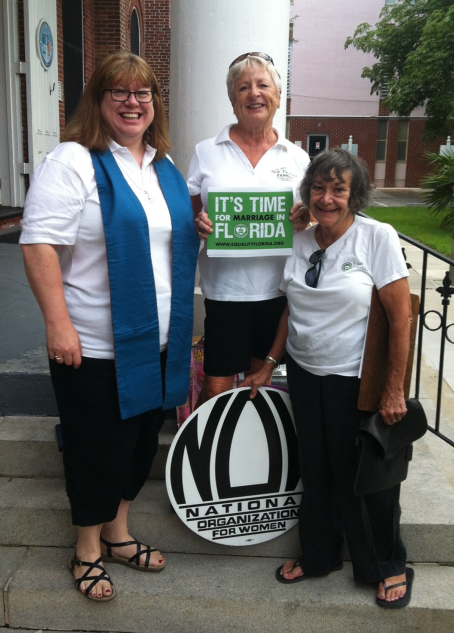
marriage equality rally 7-22That mine began with an act of social witness seems appropriate. I mean, I know much of my ministry is about the power of art to heal and inspire. Yet I also know that my ministry demands I respond to my neighbor’s needs, to stand on the side of love, to speak as a person of faith for what is right and true. And so today, I got to do that. I got to speak to the media, I got to be present as a minister and show support for people who simply want to be treated with dignity. If all had gone well, there would have been marriage licenses issued by the Monroe County clerk and I might have been able to conduct weddings. But there is a stay pending an appeal, so all we could do was call on the Attorney General to drop the appeal and show our support. The long moral arc of the universe DOES bend toward justice; it just takes longer sometimes than we want. But it is bending here in Florida… and I am glad the congregation let me begin my internship a few weeks early so I could be present.

I can’t think of a better way to start my ministry in Key West.


Update: Click here for the story from CBS-Miami.

So… then there was that time I scrolled through my Facebook newsfeed and saw this:

Running after “slaying a dragon,” at all costs, with no relationship to your divine or to the other human beings in the world, will never generate joy .

A Hero’s Journey doesn’t suit us. It’s just not going to work.
We need something else, we need a new map.

We need to step into the Heroine’s Journey.

The Hero points himself in the direction of a singular goal,
the Heroine uses her desire as her internal compass.

The Hero leads with his sword,
the Heroine leads with her pleasure.

The Hero is alone,
the Heroine locates herself in community, in sisterhood, in collaboration.

The Hero is self-sacrificing,
the Heroine receives from others.

The Hero revels in his victory, no matter the price.
the Heroine is filled with deep gratitude at the privilege of life, itself, at every twist in her storyline.

The Hero never questions himself, or his value, or direction,
the Heroine lives inside the question, and trusts that the enjoyment of her deep longing draws her desires closer to her, every day.

The Hero survives adversity against all odds,
the Heroine owns her rupture, surrenders to it, celebrates the perfection of her circumstances, no matter what.

The heroine takes a huge leap- she chooses to be the author of her own storyline, rather than the victim.

The power and the fuel that allows the Heroine’s Journey to unfold is her turn on.
Turned on to life. Turned on to her divinity. Turned on to her beauty. Turned on to her pleasure. Turned on to her power.
When a woman is turned on, she is tuned in.

And I realized that maybe my hesitation isn’t fear, but that I’ve been living the wrong story.


I don’t understand it.

I am an extrovert and love to process ideas, emotions, and experiences with people. I hold strong opinions about equality, justice, compassion, and ethics. I am willing to be in a crowd of people rallying for causes, to sign a petition, to write letters, to even blog a bit about things I believe.

But I am scared to death of stepping out on my own.

I want more than anything to be brave, to have the courage of my convictions, to not worry about what others think of me, to go boldly in the direction of my dreams and vision. I want to be an example. I want to be Me with a capital M. I want to affect change. I want to take risks and make a difference.

Instead, I worry about what others will think. I step out gingerly. I couch my comments in wiggle words. I make excuses to stay among the crowd, not stand out. I dress conservatively.

Some of my caution comes from knowing there are others who have to approve of me in order to reach my goals – including ordination. I surely don’t want to freak out the Ministerial Fellowship Committee any more than I have already freaked out the Regional Subcommittee on Candidacy (who thought I was too theatrical and garrulous). And I will always need the approval of someone who will hire me to be their minister/consultant/artist/director.

Some of my caution comes from living in a family with beloved members who are on the opposite side of the political spectrum, who are older and have the power to put me on the defensive with just a look, whose questions hit like accusations.

But most of my caution comes from being a middle aged woman in America.

I’ve been called pushy, overwhelming, aggressive, too much. I’ve been told I “scare the boys in engineering.” I’ve been told to not go too far, do too much. Even in my years as an LGBT activist in the 1990s, I experienced urges for temperance and caution.

I’ve been taught to not do too much, not to color outside the lines, not to breathe into the fullness of who I am.

Who I am, of course, is a beautiful, loving, passionate, creative, compassionate, brilliant, sexy, queer, full-figured femme woman with a deep and unshakeable call to ministry. I am a powerhouse who wants more than anything to unleash my femministry on the world. I am a guide and a muse who wants more than anything to help others unleash their awesomeness on the world. I am a missional mother who wants more than anything to love the hell out of this world.

It is a fact that I am surrounded by bold, creative, beautiful, brilliant people who are much less fearful – who step out, who make waves, who are not afraid to be who they are. One of them even got honored on this impressive list of incredibly bold femmes.

Now my experience, qualities, and desires are particular to me, but the truth is, most of us are scared of something. Something holds us back from living into our fullness. Something keeps us ineffective, uncreative, and fearful. It could be money, or family, or a job, or – and this is more likely – messages from someone who told us we should scale down our dreams and desires, to be realistic, to be responsible rather than radical.

So how do we stop the cycle? How do we stop letting others’ expectations keep us from our fullness? How do we  – how do I – stop being afraid?

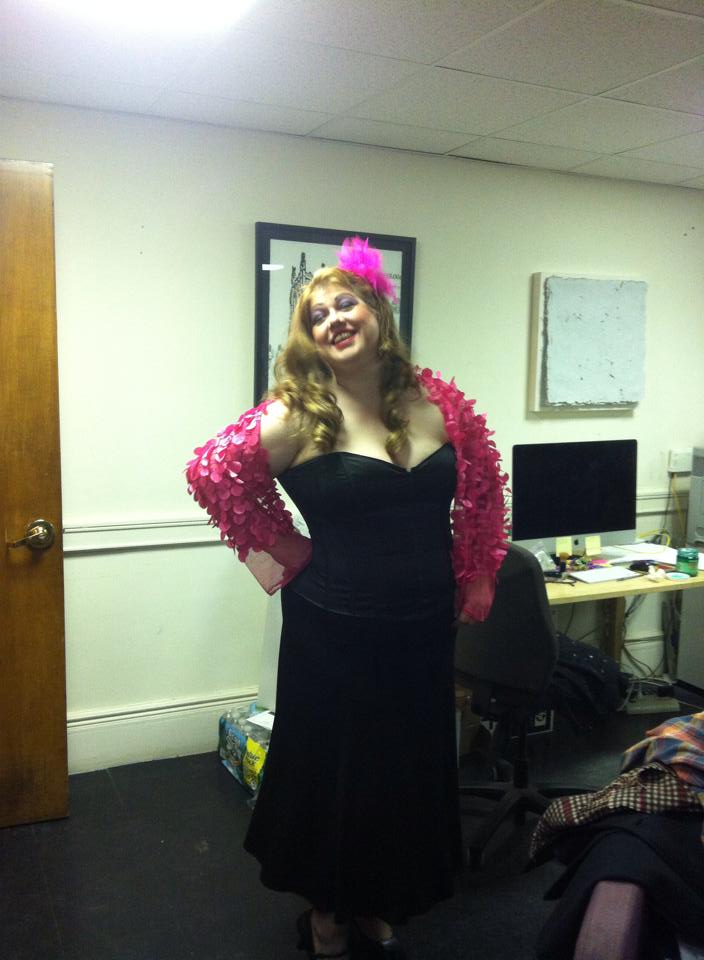
dragshow2014Over this past year, I’ve been observing my Year of Jubilee – it is my 50th on earth, and I have been consciously noting life lessons, the thoughts and habits I want to discard, and those I want to express. I’ve been unearthing my true self. It’s been incredible – I’ve made frequent posts on Facebook, run a Tumblr of ideas, slogans, and images that speak to my true self, and have done a fair bit of private journaling. I know that by the time I complete this year-long spiritual practice, I will be stronger, freer, more creative, bolder. I am daily rejecting messages that keep me cowed and timid.

But it’s a process.

And maybe that’s my real message today. If you’ve spent a lifetime being timid, boldness can’t necessarily come rushing in all at once.

But I am ready for more boldness. I’ve been preparing for it, and when I look back, I can see many places where I am much bolder than I have been as recently as last fall.

I am still scared. I am still hesitant. And I don’t want to be.

But step by step, I’m making progress.

And that’s something.